
Game Moments
Hello! Today, I’ll be looking at the game moments and the statistics and overall performance in the Liverpool vs. Brighton match. Once again, Liverpool showed how dangerous they can be with direct play. Over the past few years, pressing has become embedded in their DNA, and we can see how effectively they implement it, adapting their pressing with different formations. With this win, Liverpool has now collected the most points in the first 10 weeks of a season over the last four years. Meanwhile, Brighton continues to demonstrate consistency, maintaining a similar points tally in the first 10 games across recent seasons.
The first half of the Liverpool-Brighton match was relatively balanced. Liverpool started with a high press, usually led by Nunez, but their pressing formations varied, switching between a 4-3-3 and a 4-2-3-1. Brighton responded calmly to Liverpool’s press, mainly trying to break through the center, and they found success with this approach. Brighton’s first goal came after Ayari picked up the ball in the center, turned towards goal, and launched a dangerous attack. With Ferdi’s control and direction change, they exploited the space at the back to score, putting Brighton up 1-0. Around the 26th minute, Brighton almost doubled their lead when Ayari again found space centrally and played a ball in behind Van Dijk. Liverpool’s press was less effective as Gravenberch held back and didn’t join centrally, making it easier for Brighton to exploit the middle repeatedly.
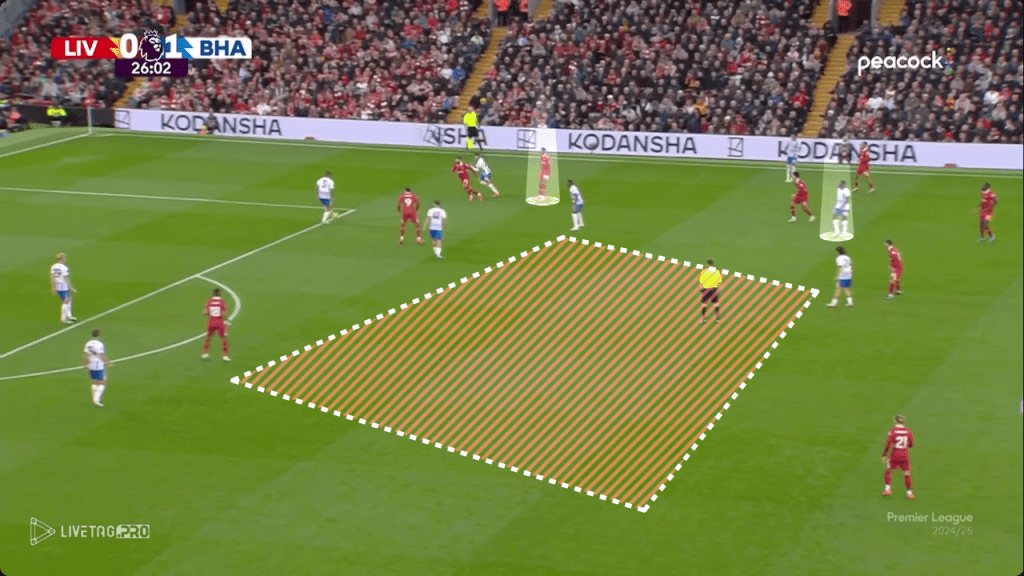
Brighton creates space in the center of the pitch.

Brighton exploits space in the center, with Ayari playing a through pass behind Van Dijk.
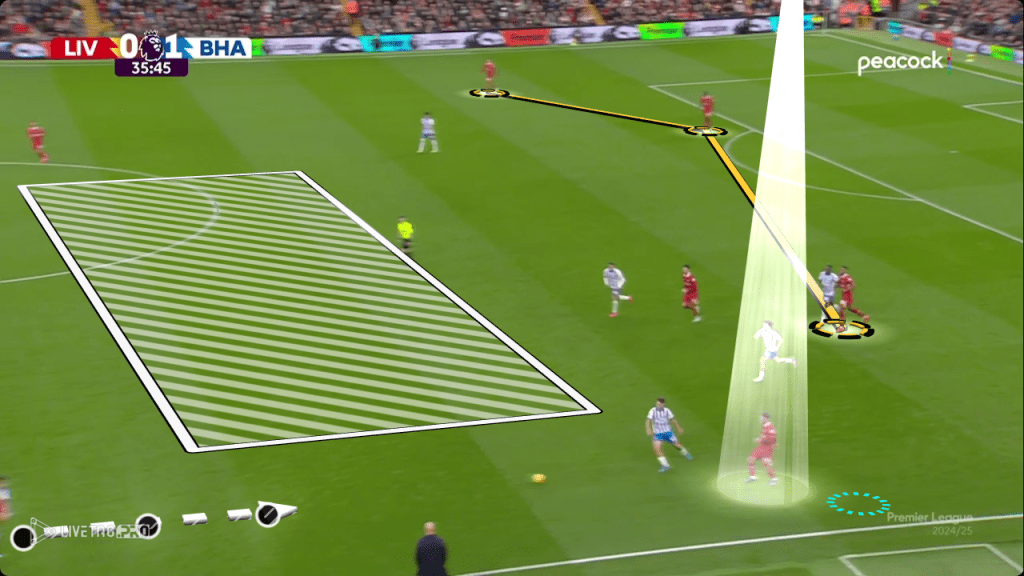
Liverpool could have benefited from directing their press more toward Brighton’s right side. Throughout the match, Brighton barely used the right side for their build-up, instead focusing on Mitoma on the left and isolating Ferdi on the right. When Liverpool directed Brighton’s play toward Gakpo and Tsimikas’s side, they regained possession more quickly.


Liverpool forcing the Brighton to their right side and wins the ball
In the first half, Trent held a deeper position on the right, forming an almost flat back four. His role changed in the second half, as he moved more centrally and even drifted to the left to support the build-up. McAllister also drifted left in the first half to create an overload on the left side, but Liverpool couldn’t fully capitalize on the spaces Brighton left in the central area.


In the second half, Liverpool continued with intense pressing, but gaps in the center remained. With Trent’s adjusted role in the build-up, McAllister advanced to a more central position. Brighton kept trying to break through the center. As Gravenberch joined the press more frequently, Welbeck dropped deeper to support the build-up, exploiting the space Gravenberch left.
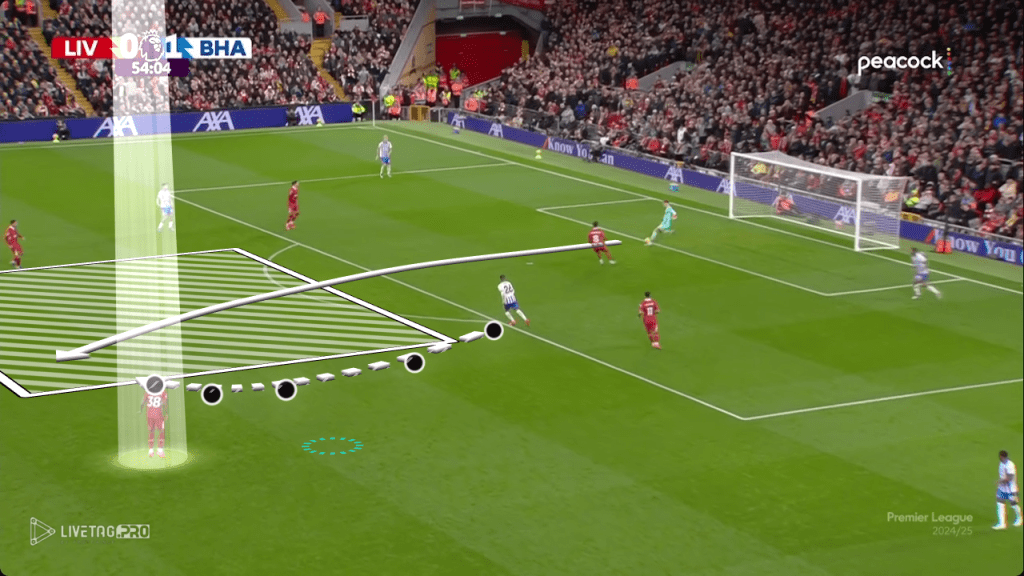

Liverpool effectively used direct play in the second half, creating a dangerous opportunity with only three passes after Salah switched the play to Gakpo, showing just how effective Liverpool’s direct style can be. They continued to find success with quick, direct plays, especially when Jones and Diaz combined to assist Salah’s goal.
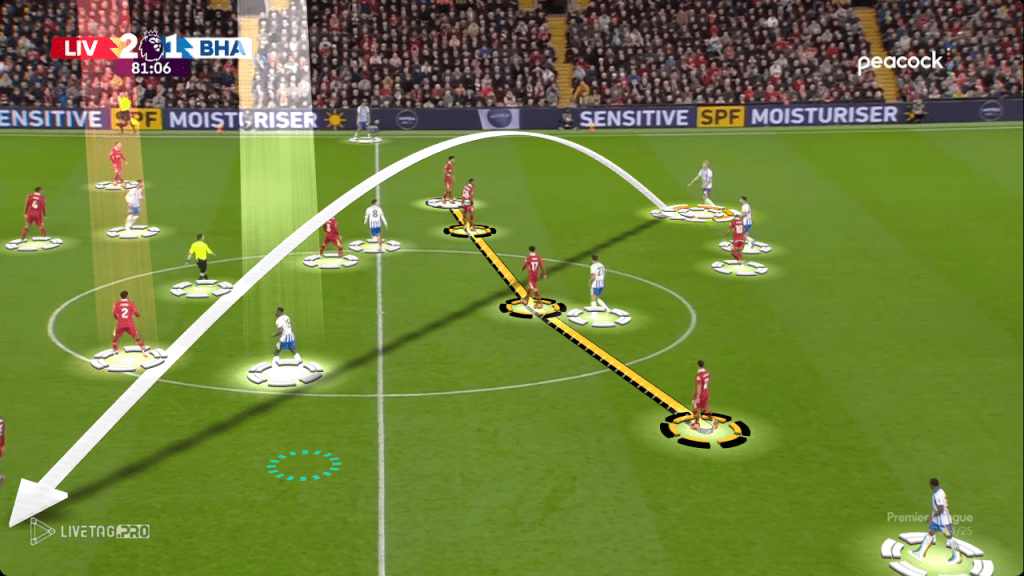
Overall, while Liverpool didn’t create many chances from positional plays, their quick, direct approach secured the victory. In the second half, as Liverpool dropped back to protect their lead, Brighton started using Van Hecke’s diagonal passes to reach Mitoma, capitalizing on Welbeck’s deep-dropping movements to isolate Trent against Mitoma in 1v1 situations.
In summary, despite the balanced nature of the game, Liverpool’s direct play proved decisive. What are your thoughts on the Liverpool-Brighton match?
 Eight And Half Ball
Yorum bırakın