
Game Moments
After Manchester City dropped two points on Saturday against Brighton, the Chelsea-Arsenal game became crucial for both teams to secure points. Both teams started cautiously, sizing each other up and avoiding early risks to prevent conceding an early goal
Arsenal started with high pressing across the pitch. The intense and fast press caused Chelsea problems in building up play. Instead of directing Chelsea into a specific area with their high press, Arsenal applied intense pressure directly on the ball, forcing Chelsea to release the ball quickly. This approach disrupted Chelsea’s rhythm and limited their passing options. The intense Arsenal press forced Chelsea into mistakes while Chelsea trying to pass out from the back, but Arsenal couldn’t create too many dangerous chances from these transitions. Arsenal pressed in a 4-1-4-1 formation, with Havertz often initiating the press. (7:09) During Arsenal’s build-up, Partey and Rice occasionally dropped back, while Caicedo joined the press for Chelsea, with Lavia holding a more defensive position in midfield. Arsenal struggled to find a quick pass and had difficulty advancing the ball into the attacking zone. Most of Arsenal’s creativity came from wide areas, but Cucurella’s strong defense limited their chances.
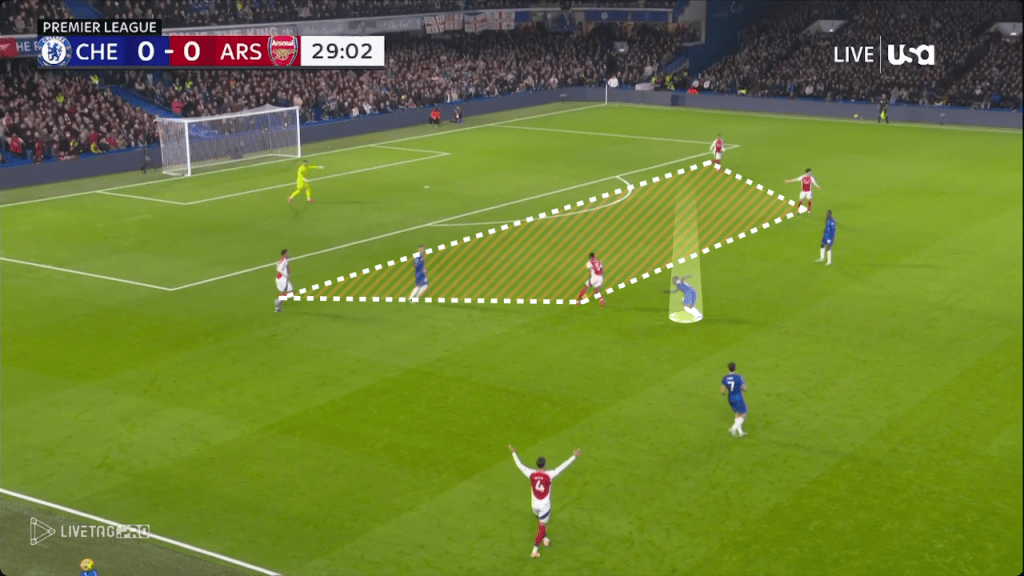
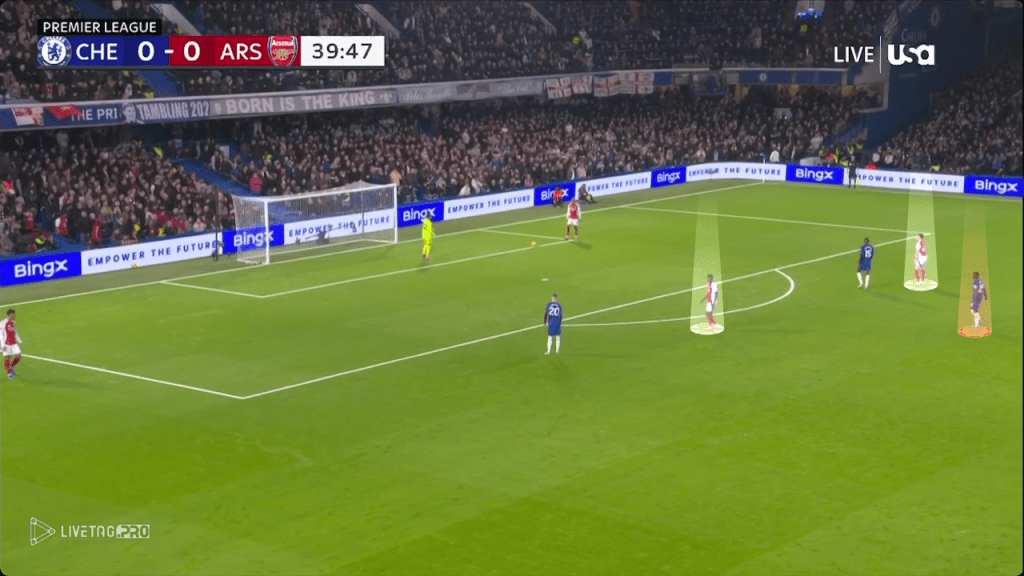

Chelsea, on the other hand, used a more asymmetrical back three in their buildup. Gusto would tuck into the right half-space, while Cucurella positioned himself on the left in a back three. Although Palmer wasn’t very influential throughout the game, he often positioned himself between Partey, Saliba, and White on the left side to receive the ball.
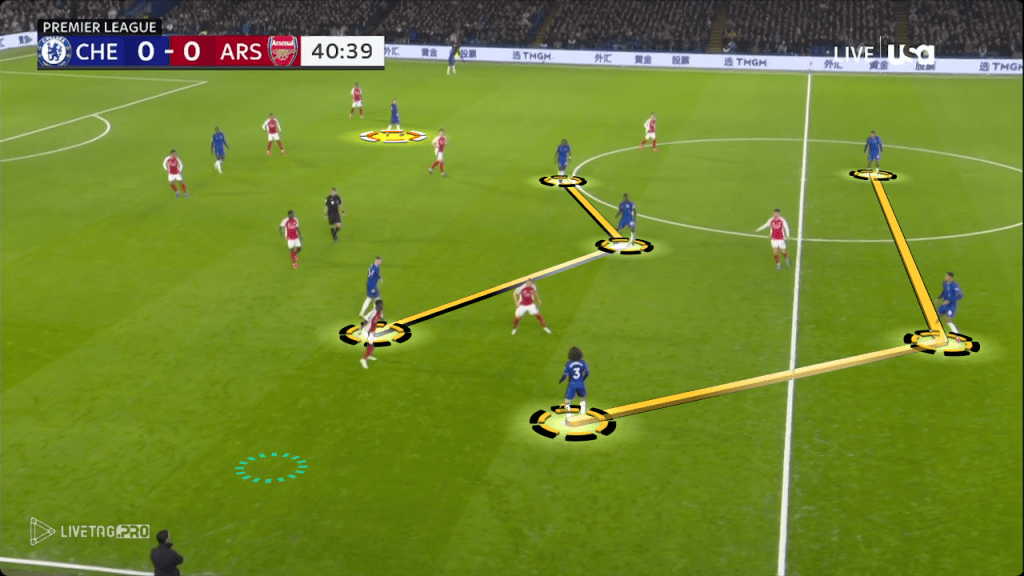

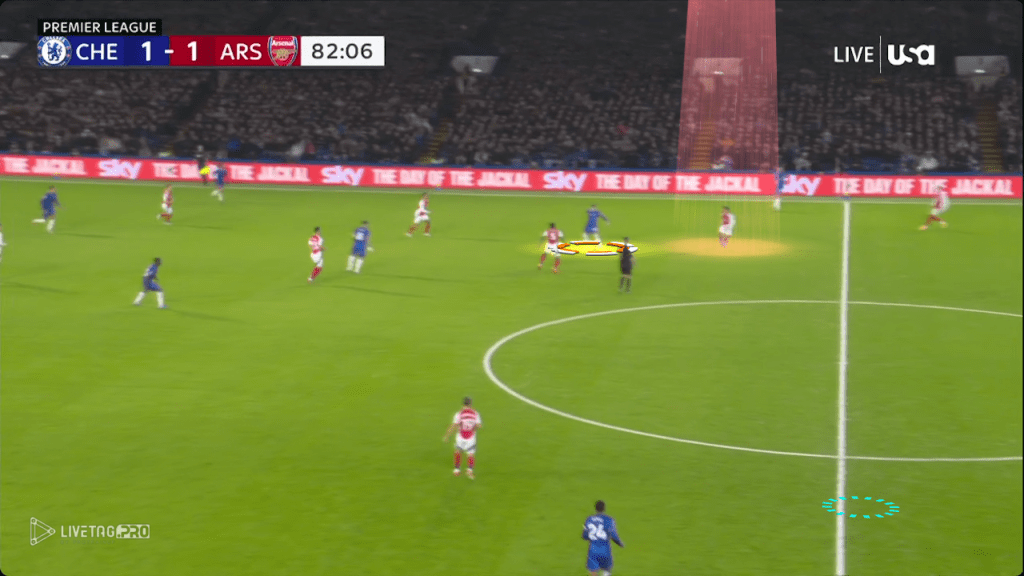
At certain points, Arsenal demonstrated plays that we recognize from previous seasons. In the attacking third, they would overload the play on one side (either left or right) to isolate a player on the opposite side for a 1v1 matchup. However, Gusto and Cucurella’s strong defense meant that Arsenal couldn’t create much from these wide positions in the first half. With Partey and Rice dropping deep and Ødegaard drifting to the right, Arsenal struggled to create any activity through the middle.
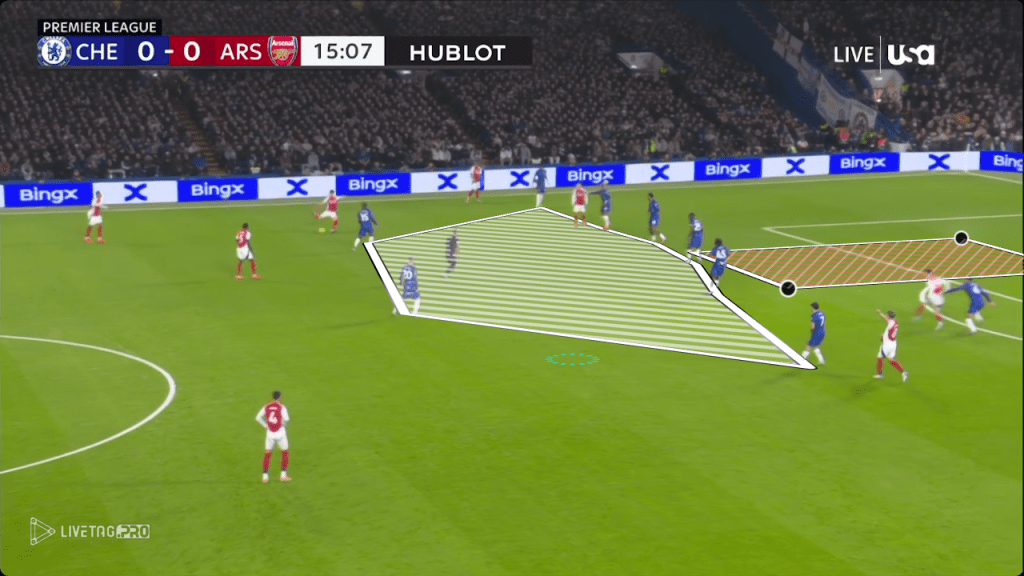
Both teams started the second half without making any changes. In the second half, Arsenal’s high pressing continued to win back the ball, but they struggled to transition quickly after winning the ball

When Chelsea built up play in the middle third, Arsenal shifted to a 4-2-2-2 low block defense, helping them prepare for quick transitions and support wide areas when Chelsea switched play. Where Arsenal stays in low block, there were moments when players didn’t apply enough pressure on the ball, allowing Chelsea to build threatening attacks. One of these moments came in the second half when Madueke crossed the ball, and Fofana got a touch on it. In a similar play, Neto found the net, scoring an equalizer for Chelsea.
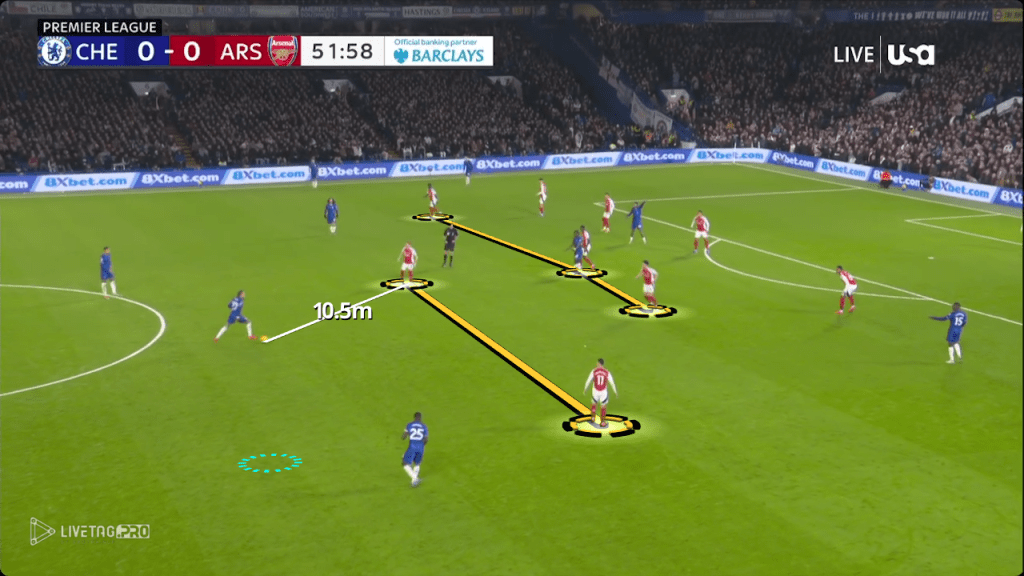

Arsenal’s goal came from a moment when they effectively used a transition after Chelsea lost possession in midfield. Although Chelsea’s defense recovered quickly, their poor defensive positioning allowed Arsenal to score. After the game was tied, Ben White joined the Arsenal attack more frequently, as seen in several instances throughout the second half. With Ben White joining the attack more frequently, Saka found more space and had 1v1 opportunities, but he still couldn’t create many chances.

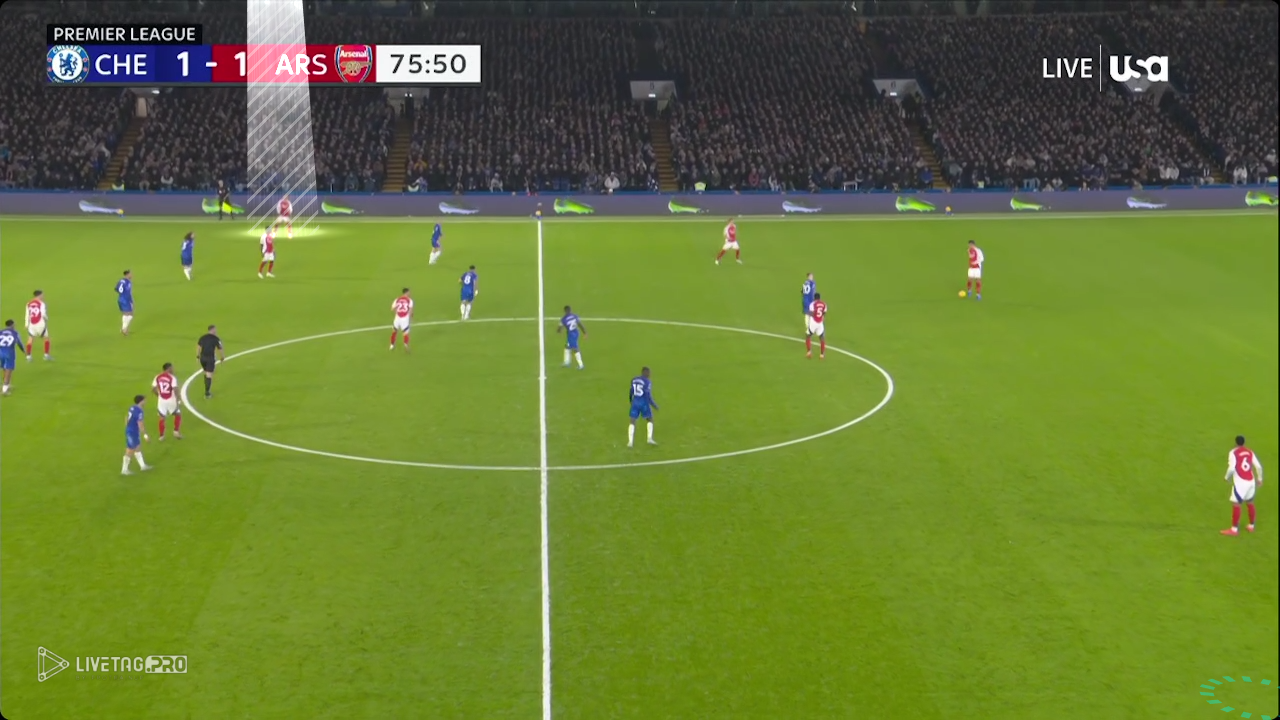


In the end, both teams shared the points with great individual performances defensively. What are your thoughts on Arsenal’s struggles against a low block?
 Eight And Half Ball
Yorum bırakın