Game Moments
Today, I’ll be analyzing the key moments, statistics, and overall performance from the Tottenham vs. Chelsea game.
This match was undoubtedly one of the most entertaining games of the season so far. Both teams’ strategies and individual performances contributed to making it a exciting encounter to watch.
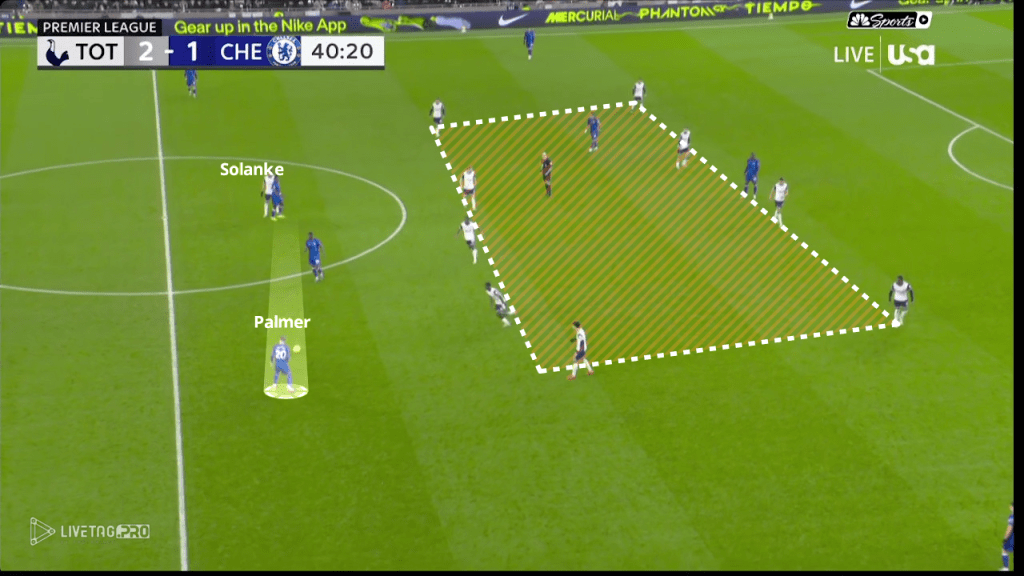
From the very first minute, Tottenham started with a high press. The intensity of their press was so high at the beginning that Chelsea struggled to build from the back. Cucurella took on more defensive responsibilities in the first half. Chelsea attempted to build up in a 2-3 formation, with Caicedo tucking inside next to Lavia, allowing Enzo to push higher. Tottenham responded to this structure with their own intense pressing, led by Solanke, who initiated their high press.
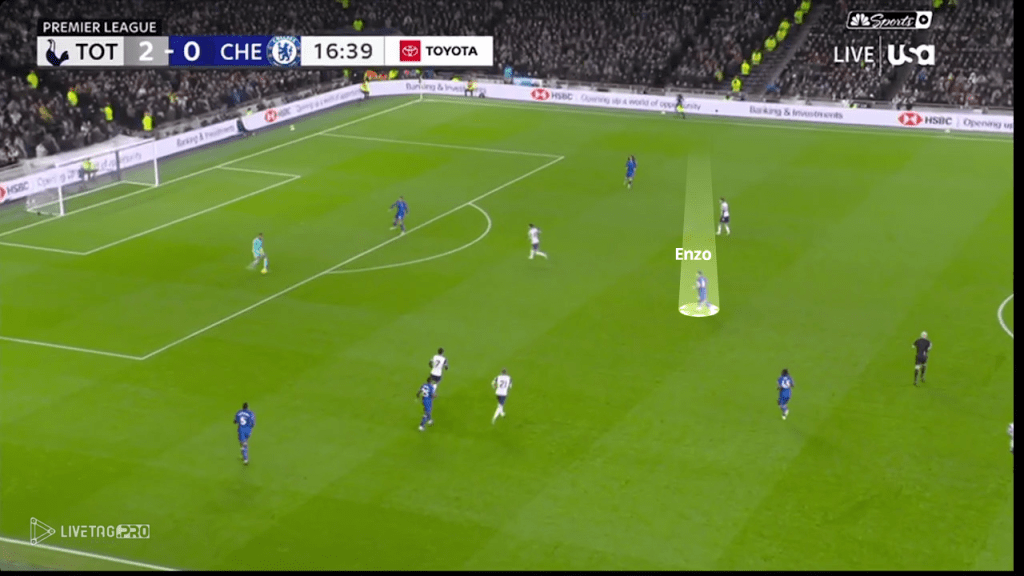
Tottenham pressed in a 1-3 formation, matching Chelsea man-for-man.(below). Even after scoring the opening goal, Tottenham continued their high-intensity press. Palmer and Enzo often dropped deep to help Chelsea’s build-up play. (below)


Tottenham’s pressing was highly effective in the first half. Neither team spent much time passing in midfield, opting instead for direct attacks, which made the game very open and fast-paced. Mistakes in midfield led to chances for both teams. Tottenham’s second goal came from a turnover in the final third, though Chelsea’s defensive line organized in a high- flat shape once again proved costly, as discussed last week.(below)

Throughout first half of game, Tottenham frequently attempted to create danger with low crosses. However, when defending in a low block, their delayed challenges and lack of physicality allowed Chelsea to create multiple chances. Chelsea’s first goal, despite having a numerical advantage in defense, Tottenham’s players avoided physical duels, giving Sancho the opportunity to score.

Second Half Performance
Chelsea made changes at halftime, subbing out Lavia. With Gusto coming on, Chelsea transitioned to a 3-2 build-up structure, with Enzo dropping deeper alongside Caicedo to help initiate play. Gusto’s role in forming a back three allowed Cucurella to push further up the pitch into the attacking third.

From the start of the second half, Chelsea controlled the tempo and had more possession. Cucurella frequently positioned himself in the half-spaces, receiving ball in the pockets and breaking through Tottenham’s compact press. These movements helped Chelsea create more chances. However, Chelsea also took risks on Cucurella sides, and Tottenham tried to exploit transitions after winning the ball in midfield. Tottenham had opportunities in 3v3 situations but failed to capitalize these chances.

Individual performances played a crucial role in shaping the match. For example, a poor touch from Bissouma in midfield led to a turnover, though Tottenham’s defenders managed to recover and prevent the attack from progressing. However, Bissouma later conceded a penalty with a poor tackle inside the box, which allowed Chelsea to score.
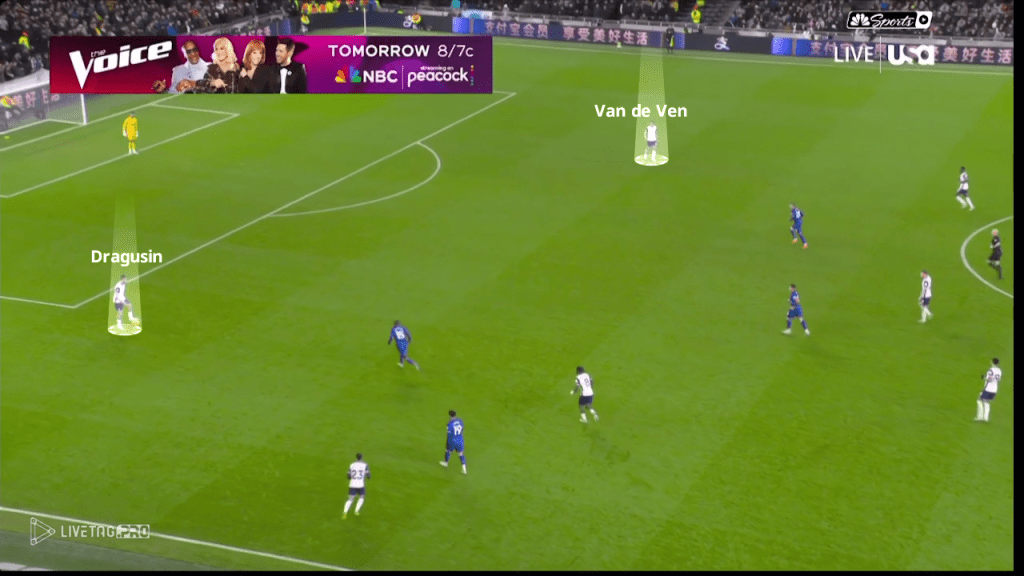
In the second half, Tottenham sat back more often in a mid-to-low block, looking to exploit counterattacks. After the score was leveled at 2-2, Tottenham began to retain more possession. Their defenders, Van de Ven and Dragusin, positioned themselves very wide, making it harder for Chelsea to press effectively
Despite balancing the game after the equalizer, Tottenham’s passive defending in the low block was punished by Palmer, who capitalized on a lack of aggression. While Tottenham’s intense high press brought them success throughout the game, their inability to maintain the same intensity in mid-to-low block defending made them vulnerable to Chelsea’s individual brilliance.
Final Thoughts
Chelsea continues to struggle against intense pressing, particularly when building from the back. Additionally, their flat defensive line caused them trouble once again this week.
As for Tottenham, aside from relying on strong individual performances, what do you think they can do to improve their mid-to-low block defending and make it more effective?
 Eight And Half Ball
Yorum bırakın