
Game Moments
Hello again!
This is my first post in a while. I’ve been busy with personal matters, and recently, I bought a Remarkable tablet. It took me some time to understand its functionality, but with my limited experience so far, I find it very helpful for keeping notes organized. However, if you prefer traditional methods, this might not be for you, and you may want to stick with pen and paper.
Now, let’s dive into last week’s game: Arsenal vs. Chelsea.
First Half Analysis
Chelsea’s limited squad options restricted Maresca’s tactical flexibility. In the first half, they created a few dangerous opportunities from Cucurella’s side but failed to capitalize on them. With few options in central midfield, Maresca opted to use James as a No. 6 alongside Caicedo. Chelsea operated in a 4-4-2 formation and maintained a mid-block. Their compact shape forced Ødegaard to drop deep in the first half.
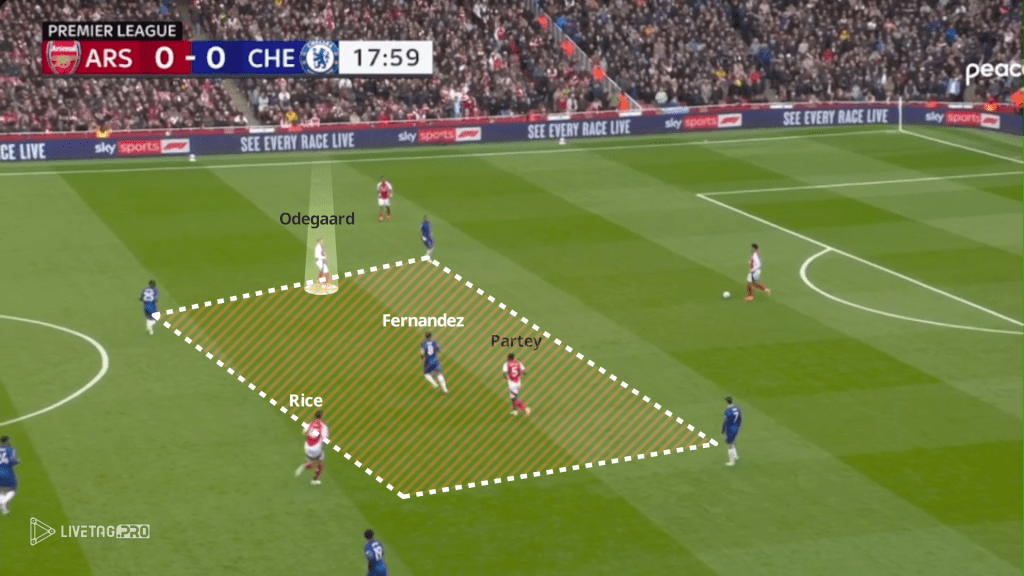

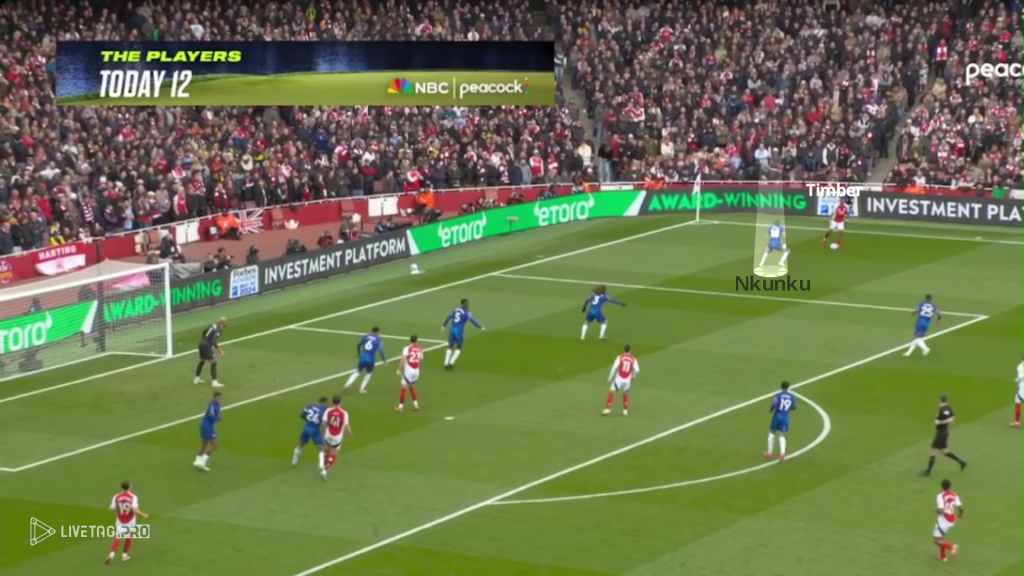
Arsenal targeted Nkunku’s side in attack, aiming to exploit his defensive limitations. They created a few chances before Merino’s goal gave them the lead. As Ødegaard dropped deeper, Rice pushed forward alongside Merino. These two players frequently disrupted Chelsea’s defensive structure by pulling defenders out of position.
During Arsenal’s build-up, Caicedo closely marked Ødegaard. However, the spaces Caicedo vacated were exploited by Martinelli, Merino, and Rice, who made runs behind Chelsea’s defensive line. After conceding, Chelsea maintained their 3-2 build-up structure, with James and Caicedo forming the midfield pivot. However, they lacked creativity against Arsenal’s defensive setup.
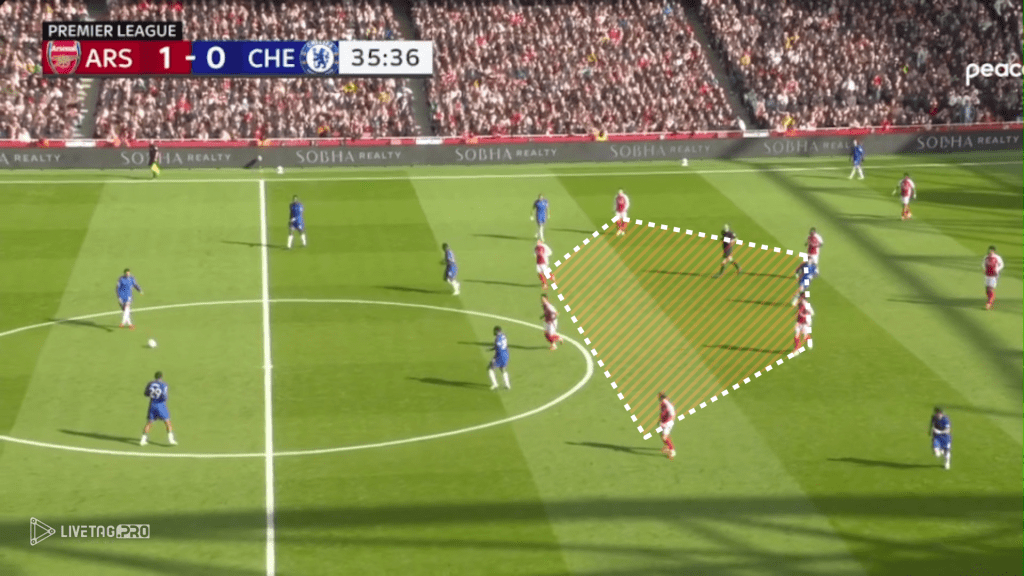
After Arsenal’s first goal, Cucurella pushed higher up the pitch, creating a few attacking threats for Chelsea, especially against Arsenal’s 4-2-3-1 defensive structure. When Arsenal failed to win the ball in their high press, they dropped into a low block, limiting Chelsea’s ability to create chances due to their lack of width.
Second Half Performance
In the second half, Chelsea continued their 3-2 build-up with Caicedo and James, but their front five remained too static, limiting their attacking threat. Arsenal slowed the tempo of the game and waited in a low block, making it difficult for Chelsea to break through. Even though Chelsea had more possession in the second half, Arsenal’s game plan allowed it, making it an ineffective advantage.
Final Thoughts
Considering Chelsea’s injuries and squad limitations, their defensive approach throughout the 90 minutes lacked creativity against Arsenal. The lack of playmaking ability from James and Caicedo in the midfield was noticeable. As seen throughout the season, Chelsea’s high defensive line struggled against Arsenal’s players, such as Martinelli and Timber, leading to several dangerous moments.
Arsenal controlled the tempo of the game, and their ability to dictate play was evident throughout. In the second half, they managed the pace well, securing a comfortable victory at home.
 Eight And Half Ball
Yorum bırakın