Game Moments
Hello again!
Chelsea arrived after an away fixture against PSG in the Champions League, where poor individual performances and defensive errors resulted in a 5-2 defeat. They therefore looked to respond domestically, but Newcastle is one of the most challenging opponents for a recovery performance.
First Half Analysis
Chelsea initially focused on the right side, combining through Palmer and Gusto during the opening 15 minutes. Although they dominated possession in this period, they created only one clear opportunity from open play.
Off the ball, Newcastle defended in a 4-1-4-1 mid-to-low block. In this structure, they left Anthony Gordon as the highest player, targeting to attack quickly from the transition play. By applying man to man pressure onto the double pivot of Reece James and Moisés Caicedo during Chelsea’s 2-2 build-up, Newcastle disrupted Chelsea’s ability to progress centrally.
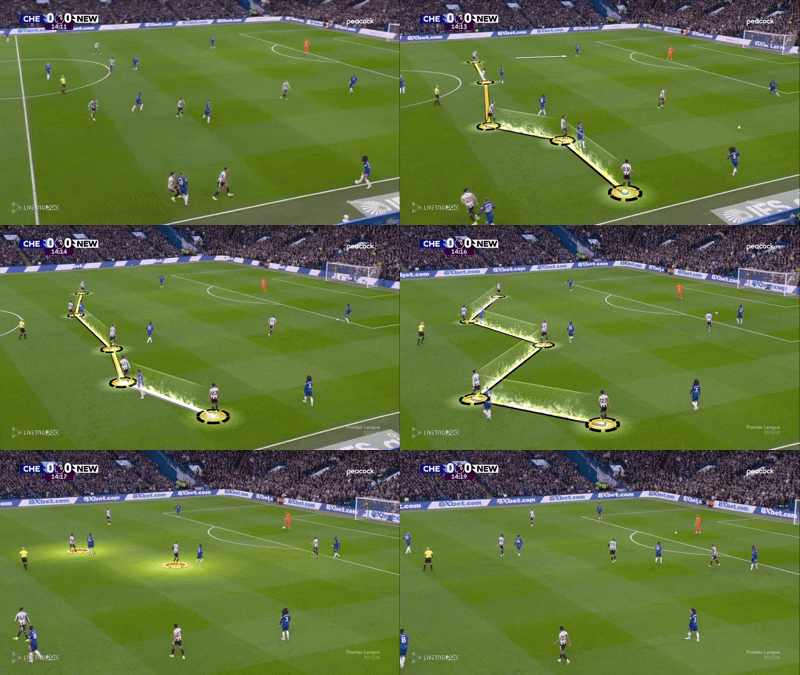
Newcastle showed little intention to dominate possession in the early stages. Despite Chelsea’s intense high press limiting their time on the ball, Newcastle scored with their second meaningful possession sequence, completing a 15 consecutive pass move before finishing
Chelsea’s consistently high defensive line, maintained in a flat back four, was again exposed. Following sustained possession, Livramento carried the ball through the half space. As Chalobah lost his position, a well-timed pass into the space allowed Joe Willock and Gordon to combine and give Newcastle the lead.
Chelsea ended the first half with 66% possession, building primarily through the right side. Gusto alone delivered five crosses in the first half. Against Newcastle’s deeper defensive phases, Gordon remained close to Reece James to limit his involvement in build-up.
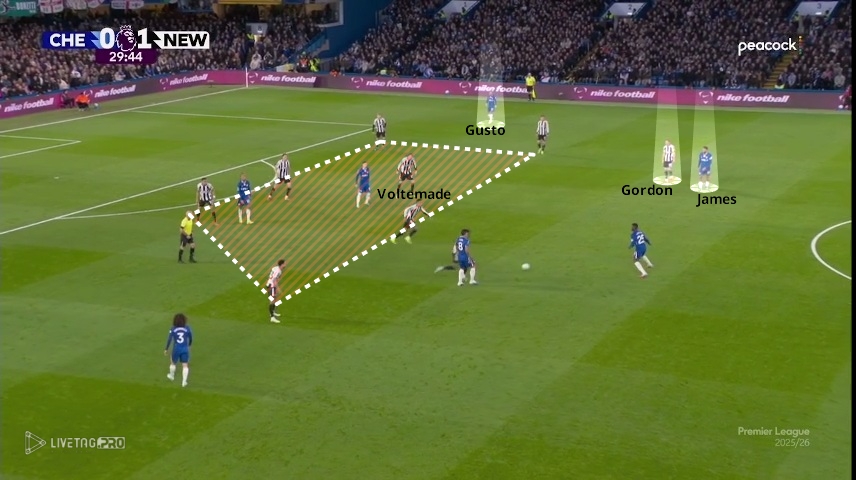
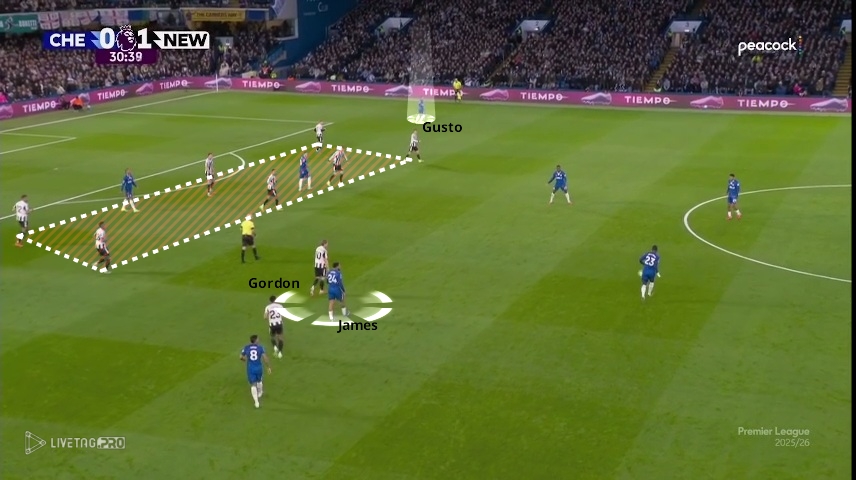
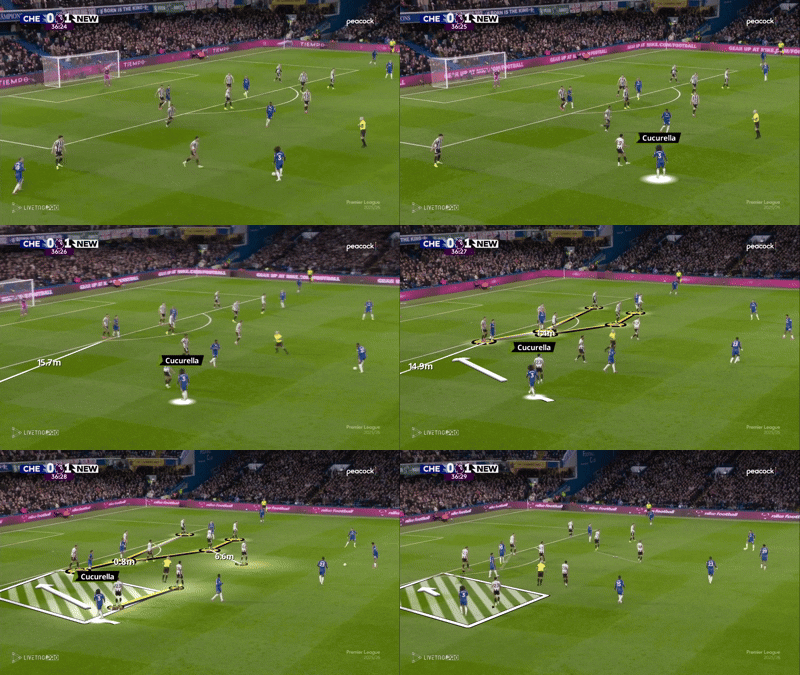
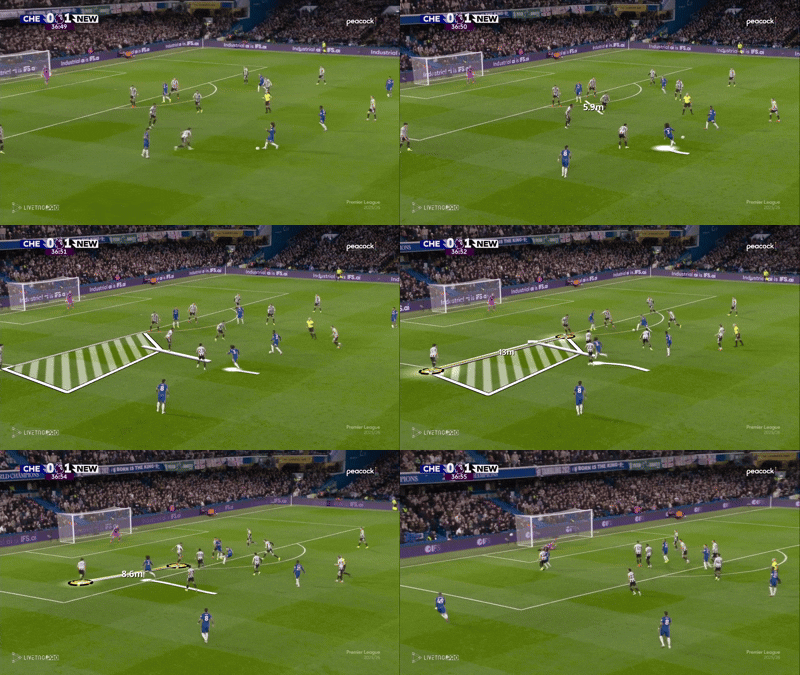
In the first half, Alejandro Garnacho provided the width on the left side. With Livramento remaining tight to Garnacho, Marc Cucurella attacked the space between Livramento and Thiaw through underlapping runs into the half-space.
Newcastle adjusted this approach in the second half. Livramento stayed narrower and closer to Thiaw, allowing Garnacho more space in wide areas while protecting the inside channel more effectively.
Second Half Performance
Chelsea began the second half with changes involving Gusto and Liam Delap. As a result, Reece James moved to right-back, and Chelsea shifted into a 4-4-2 formation with Delap and Pedro leading the line.
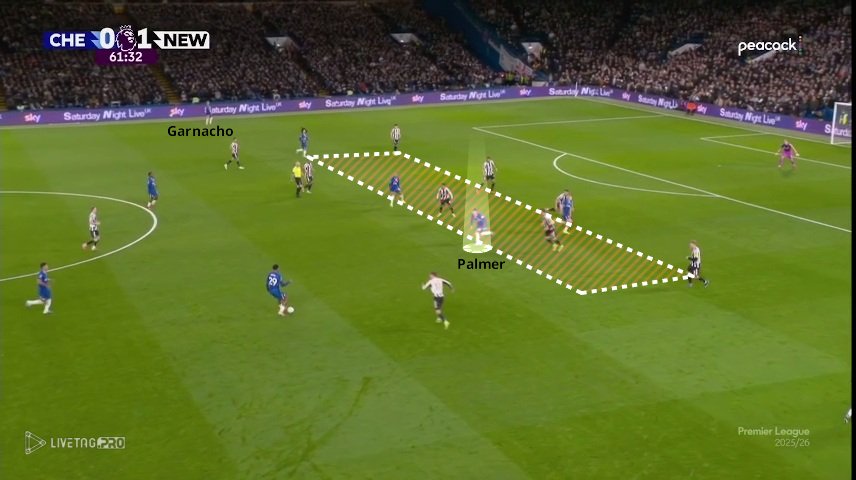
Despite the structural change, their tactical approach remained largely the same. Garnacho continued to provide width on the left, while James held the width on the right, allowing Palmer to occupy the half-space. However, Newcastle’s 5-4-1 block effectively closed central spaces and prevented progression between the lines.
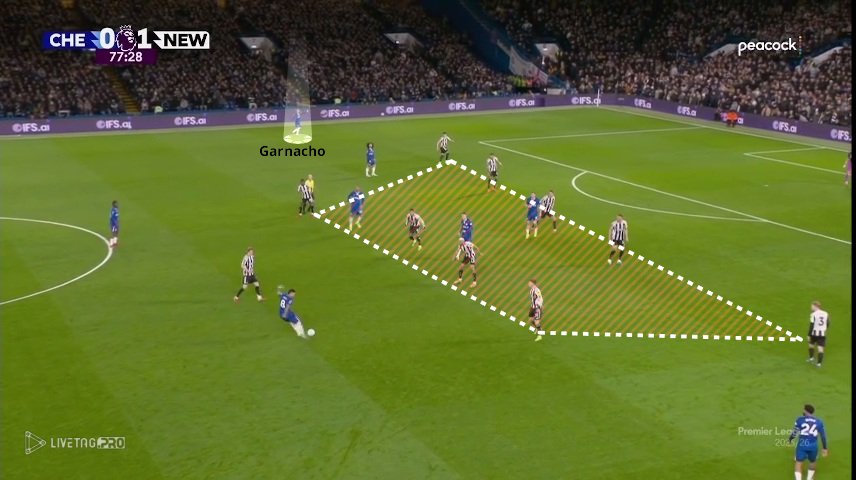
Unable to create through central areas, Chelsea continued to rely on crosses throughout the second half. Although they managed to isolate Garnacho in 1v1 situations, he struggled to beat his opponent and failed to generate significant attacking output.
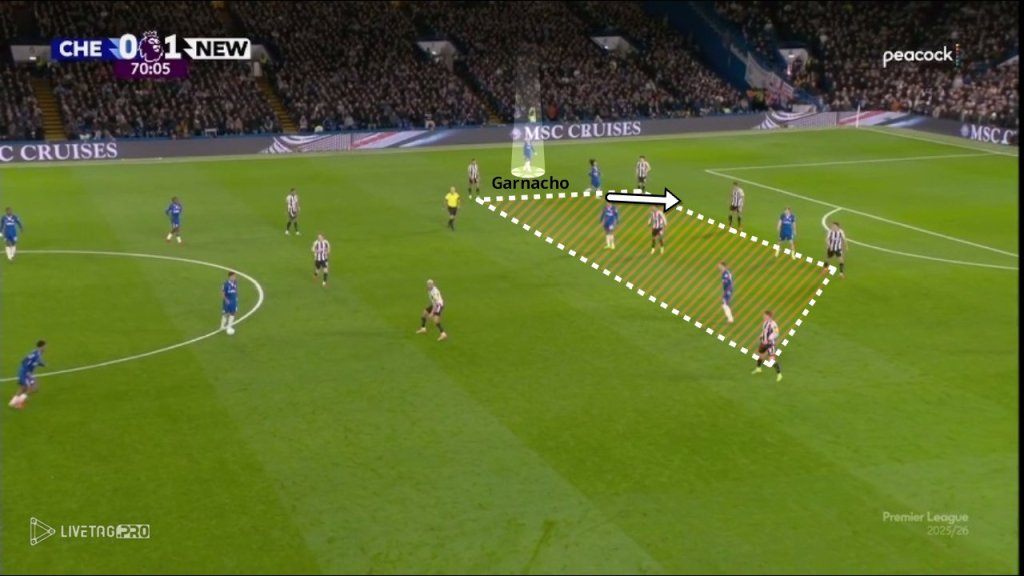
Following the introduction of Hato and Fofana in the 82nd minute, Chelsea adjusted their build-up structure. They began constructing play with a back three, attempting to stretch Newcastle’s compact defensive block by increasing the width of the pitch. During this phase, Garnacho operated on the right, while Cucurella held the left touchline.
Despite these adjustments, Chelsea was unable to create any clear chances and ultimately left the game without a result.
Final Thoughts
Chelsea’s use of a high defensive line in a flat back four once again proved costly. Newcastle’s compact defensive structure effectively closed central spaces and forced Chelsea to attack through wide areas.
Chelsea delivered a total of 28 crosses during the match, highlighting their reliance on wide play.
Newcastle’s decision to position Woltemade within midfield while leaving Gordon high provided a constant threat in transition, allowing them to attack quickly and efficiently after regaining possession.